
How Traceability Files Change Fleet Procurement Judgment?
Intro
For decades, heavy vehicle procurement decisions rested heavily on limited signals: external appearance, test drive impressions, seller reputation and price. A buyer had to trust the supplier’s word about what work was performed, whether fatigue was detected, and which parts were replaced. This creates a natural bias — cheaper units often look acceptable on surface inspection, while unseen defects emerge only after delivery.
REMAN ROAD traceability files bind every rebuild action, inspection log and validation result to a unique VIN. Instead of relying on verbal guarantees, procurement teams review a permanent, auditable asset record. This article explains how traceability files fundamentally change the judgment framework of fleet procurement.
It replaces subjective confidence with verifiable evidence
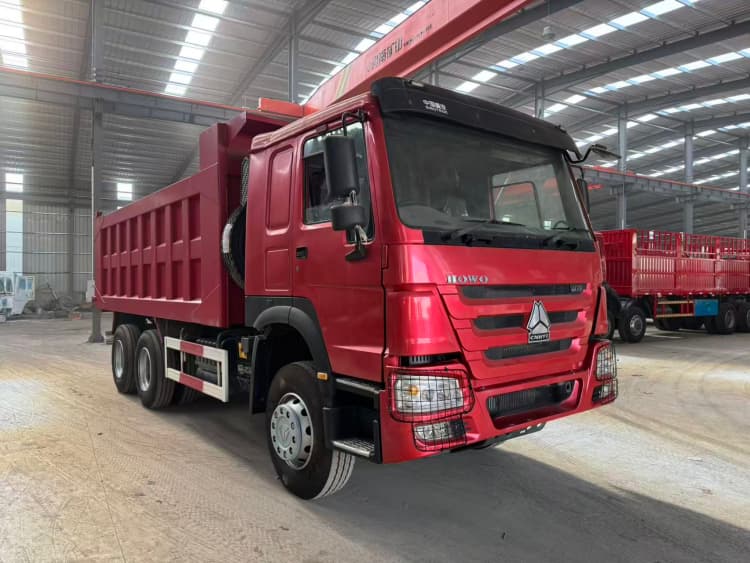
Without traceability, procurement judgment is based on impression. A shiny repainted truck may pass visual inspection yet carry undetected frame fatigue or undocumented poor weld repairs. Traceability files lay out the full workflow: core intake grading, NDT inspection zones and results, components rejected, parts reused, new components fitted, machining tolerances, dynamometer and full-load test data.
Buyers no longer judge “whether it looks good”; they judge whether the asset meets the written acceptance standard. Poorly executed rebuilds cannot hide behind cosmetic finishing.
It enables like-for-like comparison across competing bids
Comparing reman trucks from different China remanufacturers is difficult when each vendor defines “rebuilt” differently. One may replace only failed parts, while another completes full teardown and structural screening. Traceability records standardise the comparison basis.
Procurement teams can check the scope of work for each VIN: whether structural NDT was completed, whether powertrain was fully disassembled, and whether third-party verification was applied. This prevents apples-to-oranges pricing comparisons, where a low bid may simply omit critical inspection and rebuild steps.
It clarifies liability boundaries before purchase
A common procurement dispute is assigning fault after a breakdown: was the failure caused by a rebuild defect, or by site misuse, overload and skipped service? Traceability files create a baseline snapshot captured at the point of reman acceptance.
Combined with later service and telemetry logs, inspectors can trace root cause. When this framework is known upfront, procurement teams understand exactly what the warranty covers and what it excludes. This removes the risk of buying a warranty that cannot be proven or enforced.
It supports TCO modelling rather than only upfront price evaluation
Traceability data feeds directly into financial forecasting. Records reveal which major assemblies are retained, which are new, and the verified remaining service life under the assigned duty class. Planners can estimate future wear-part consumption, expected service intervals and residual value at project exit.
Instead of choosing based on sticker price, procurement teams can model expected downtime risk and long-run operating cost. Traceability turns abstract TCO assumptions into document-backed inputs.
It satisfies pre-qualification, ESG and insurance audit requirements
Large mining principals, infrastructure financiers and insurers increasingly require asset proof files. Generic used trucks or informal rebuilds have no auditable trail, which may disqualify bids or invalidate insurance coverage after an incident.
REMAN ROAD traceability files include component reuse records for carbon and virgin material savings, NDT safety evidence and test certification. This lets procurement teams satisfy client sustainability and safety requirements as part of the tender submission.
It preserves asset value across resale, redeployment and handover
Procurement judgment traditionally treats used and rebuilt assets as illiquid, risky items with unpredictable resale value. Traceability files travel with the VIN. When the project ends, the next operator or buyer can independently review the rebuild history, test results and prior service records.
This raises the asset’s market confidence and stabilises residual value. For project-based fleets, this predictable exit value is a major factor in the procurement business case.
It enables batch-level quality trend analysis
For large fleet orders, aggregated traceability data reveals systemic patterns: which component types fail screening most often, which process steps create variability, and whether a batch deviates from the standard.
Procurement teams can use this data to adjust acceptance criteria, require corrective action from the China remanufacturers, or reject batches with consistent quality drift. This moves procurement from a one-off purchase decision to an ongoing quality governance relationship with the China remanufacturers.
It shifts negotiation leverage toward the buyer
Without traceability, the remanufacturers controls all information about the rebuild. The buyer must accept the seller’s version of the work scope. With formal traceability files, the buyer can specify required documentation as a non-negotiable tender condition.
Deliverables are not just trucks; they are trucks plus complete, validated records. China remanufacturers who cannot produce this level of documentation are easily identified and excluded, even if their pricing is attractive.
Important guardrail
Traceability files are only valuable if the data itself is trustworthy. The system must include independent third-party verification, timestamped records and immutable VIN linking.
A traceability file filled with self-reported, unchecked workshop notes delivers the same limited value as a seller’s statement. Good traceability requires both the record and the process controls behind it.
Final Takeaway
Traceability transforms procurement from a judgment based on trust and appearance into a decision based on documented facts. For procurement and risk managers, the key takeaway is simple: REMAN ROAD traceability files give teams the evidence to compare quality fairly, model true TCO, define liability and satisfy audit rules, removing the information asymmetry that favours low-quality, low-price rebuilds.
One Comment