
Why Reliable Reman Truck Makes It Easier to Forecast Repair and Maintenance Budgets?
Introduction
Budgeting for heavy truck maintenance is notoriously difficult when the fleet relies on uncertified used vehicles. Wear is hidden, service history is incomplete, and failures strike unpredictably. One month may bring minimal spend, while the next can deliver a cascade of expensive roadside repairs that blow forecasts.
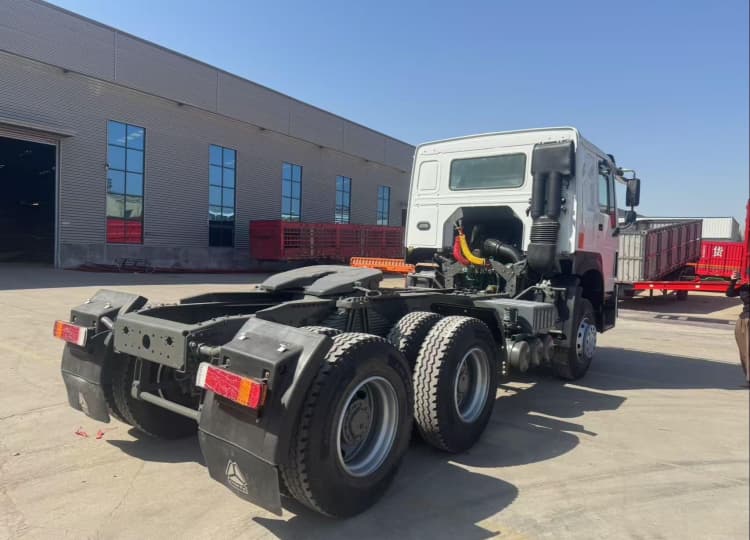
REMAN ROAD reliable reman trucks change this dynamic. Every unit is rebuilt to a consistent performance benchmark, fully tested, and delivered with a clear service schedule rooted in its rebuild reset point. Fleet finance and maintenance teams can move away from conservative contingency padding and build forecasts based on predictable wear curves.

A fixed wear baseline replaces unknown degradation
A reliable reman truck’s rebuild date marks the official starting point of its second service life. Critical high-wear assemblies — powertrain, brakes, axles and hydraulics — are either renewed, machined or validated to defined tolerance limits.
Unlike a used truck whose wear has accumulated over years of unknown loads and repairs, the reliable reman truck begins with a known condition state. Maintenance planners can calculate expected component lifespans from this baseline, rather than guessing how much usable life remains. This foundation is the core difference between educated forecasting and speculative budgeting.
Standardised service intervals spread cost evenly
Each reliable reman trucks specification comes with a published maintenance schedule tied to operating hours, mileage or site duty cycles. Service events such as oil changes, filter replacements, brake inspections and driveline checks happen at planned, regular intervals.
Costs are distributed steadily across the asset’s lifecycle, instead of clustering into sudden, large emergency bills. Finance teams can allocate maintenance spend month by month, smoothing cash flow and reducing the need for large emergency budget reserves.

Fewer unplanned failures cut unpredictable expense lines
The biggest budget killer for fleets is unscheduled repair. Hidden frame fatigue, worn injectors, failing clutches and degraded brake circuits can trigger costly breakdowns that were never included in the forecast.
Reliable reman truck’s pre-release testing, including NDT structural checks, powertrain bench validation and loaded cycle testing, eliminates many latent defects before deployment. Unplanned work becomes a rare exception rather than a regular expense. Forecasts can be built primarily around planned service, with only a small, realistic contingency for unexpected events.
Warranty coverage caps financial exposure
Qualified reliable reman trucks ship with formal warranty coverage for core assemblies. If a covered component fails prematurely, repair cost and downtime support fall under warranty terms. This creates a hard upper limit on certain high-value repair risks.
Budget planners do not need to reserve large sums for catastrophic driveline failures, as the warranty absorbs that risk. This predictability is especially valuable for short-term project fleets with fixed, non-negotiable budgets.
Consistent performance across the fleet enables portfolio-level modelling
When all reman trucks follow the same rebuild standard and service rules, their maintenance patterns are comparable. Fleet managers can aggregate historical hour-based cost data from the reman fleet to refine future forecasts.
They can separate maintenance costs by duty profile: heavy quarry haulage, highway transport or light yard movement. Over time, the dataset becomes more accurate, and budget forecasts improve with each operating cycle. This is impossible with a mixed pool of random used trucks, each with unique and unknown wear history.
Conclusion
REMAN ROAD reliable reman trucks simplify maintenance budgeting by removing the uncertainty that distorts cost forecasts. They offer a verified wear baseline, scheduled service cycles, reduced unplanned breakdowns and warranty protection. For fleet teams, this means leaner contingency budgets, more predictable cash flow and fewer unpleasant surprises when reconciling monthly maintenance spend.
One Comment