
True Reman & Circular Economy — Sustainability for Heavy Vehicle Fleets
Introduction
The global construction and mining industries face dual pressures: rising raw material costs and stricter sustainability requirements. True remanufacturing emerges as a practical circular economy solution for heavy commercial vehicles. It recovers value from used equipment rather than scrapping it, balancing operational economy and environmental responsibility.
What Does Circular Economy Mean for Heavy Trucks?
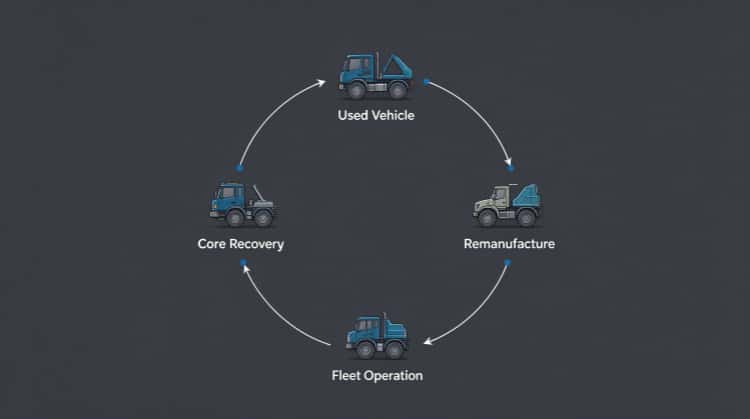
The linear economic model follows a simple path: extract raw materials → manufacture new vehicles → use → scrap. A circular model retains usable core components, regenerates worn parts, and rebuilds the whole vehicle for a second service life.
For heavy-duty fleets, circularity is not just an environmental slogan. It is a practical asset strategy that reduces reliance on newly mined metal, cuts carbon emissions and reduces waste sent to scrap yards.
Carbon & Resource Savings of Industrial Remanufacturing
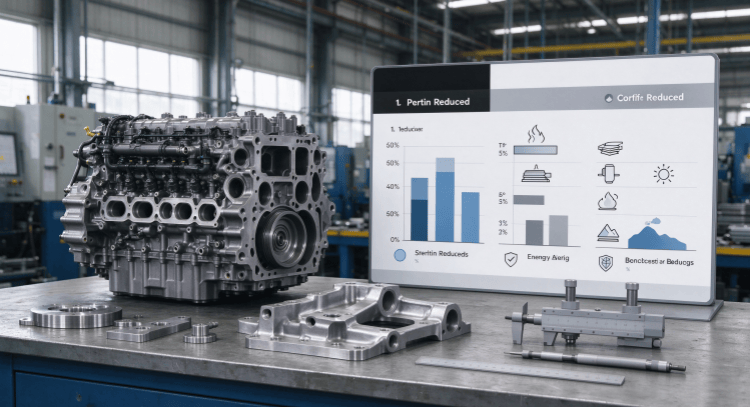
Manufacturing a brand-new heavy truck consumes massive steel, aluminium, rubber and energy. True remanufacturing reuses qualified core parts, drastically cutting resource consumption. Core environmental benefits:
- Reduce raw metal consumption by over 70% compared with new vehicle production
- Cut manufacturing-related carbon emissions significantly
- Reduce metal scrap volume and landfill waste
- Lower energy use compared to full new assembly
Every certified reman truck preserves the embodied carbon locked in the original chassis and structural components.
ESG Reporting Advantages for Fleet Operators
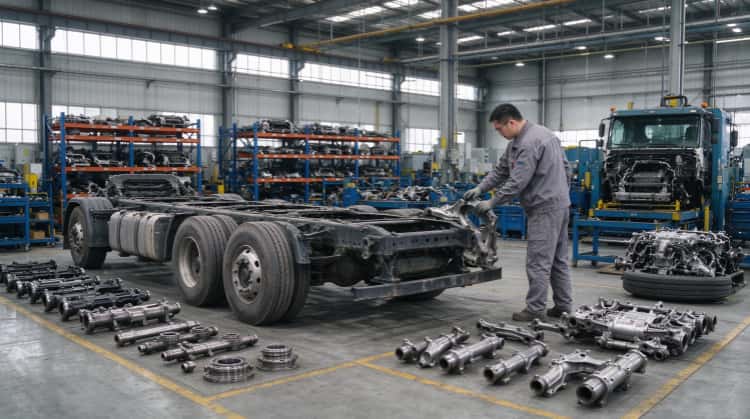
Global clients, financiers and tender evaluators increasingly require formal ESG documentation. Deploying Industrial reman fleets helps operators collect verifiable sustainability data. Fleet ESG benefits:
- Quantifiable carbon reduction records for sustainability reports
- Meet green procurement requirements of large infrastructure projects
- Improve qualification competitiveness in international bidding
- Demonstrate responsible asset management to investors and stakeholders
Unlike vague green marketing claims, Industrial remanufacturing comes with traceable process records to back ESG data.
Circularity Does Not Equal Compromised Performance
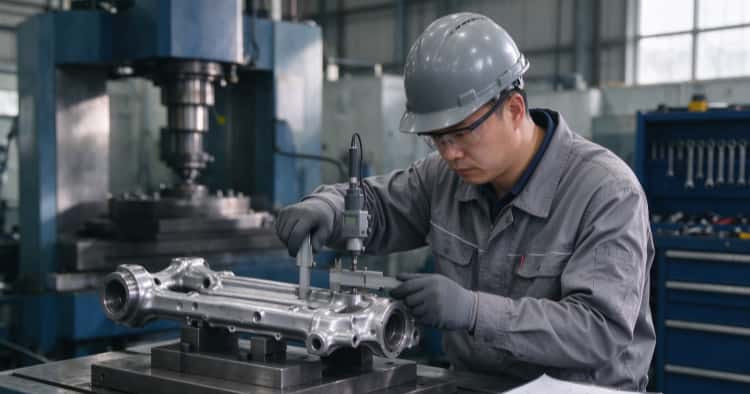
A widespread misconception: circular assets mean lower quality. True remanufacturing does not settle for leftover worn parts. All components are measured against OEM tolerances. Parts outside specification are either regenerated or replaced.
The finished REMAN ROAD certified reman truck must pass load testing to reach near-new performance. Sustainability and reliable fleet operation can be achieved at the same time.
End-of-Life Asset Closed-Loop Strategy
A mature circular fleet strategy builds a closed asset loop. When certified reman truck eventually reach their service limit, valuable cores can be recovered again for next-generation remanufacturing, instead of being fully scrapped. Fleets can plan asset rotation cycles:
- Deploy certified reman trucks for construction/mining operations
- Track component health through full lifecycle monitoring
- Recover reusable core parts once service life ends
- Feed qualified cores back into industrial reman workflow
This closed-loop model stabilizes asset supply and reduces long-term procurement volatility for large fleets.
Barriers & How Standardized Reman Solves Them
Many fleets hesitate to adopt circular reman assets due to market uncertainty. The biggest barrier is inconsistent quality from unregulated workshops. Without unified standards, buyers cannot confirm whether a truck meets genuine reman criteria. Standardized reman systems solve these barriers by:
- Setting fixed inspection and component tolerance rules
- Recording every process step for full traceability
- Issuing formal certification for each certified reman truck
- Creating consistent benchmarks the whole industry can follow
Standardization turns circular reman from a risky experimental option into a scalable, trusted fleet asset strategy.
Conclusion
True remanufacturing turns old heavy vehicles into high-performance assets while conserving resources. It allows fleet managers to meet ESG targets without sacrificing uptime or productivity.
As circular economy rules become more common globally, true remanufacturing will become a core component of forward-thinking heavy fleet asset planning.