
Standardized Industrial Reman Workflow: Full Quality Control System
Introduction
The biggest difference between informal workshop renovation and certified industrial reman workflow lies in standardization and systematic quality control. Many fleet operators mistakenly believe that remanufacturing quality depends on technician experience or random part replacement. In professional industrial reman systems, quality is not controlled by manpower — it is locked in by fixed workflows, unified tolerance standards, mandatory inspection gates, and full-process verification protocols.
A complete standardized reman workflow turns uncertain, experience-based maintenance into repeatable, auditable, factory-level manufacturing. Every heavy asset that exits the reman production line follows identical technical standards, eliminating quality instability and latent operational risks. This article breaks down the full industrial reman workflow and layered quality control system that supports reliable fleet asset regeneration.
Pre-Production Base Unit Screening & Eligibility Verification
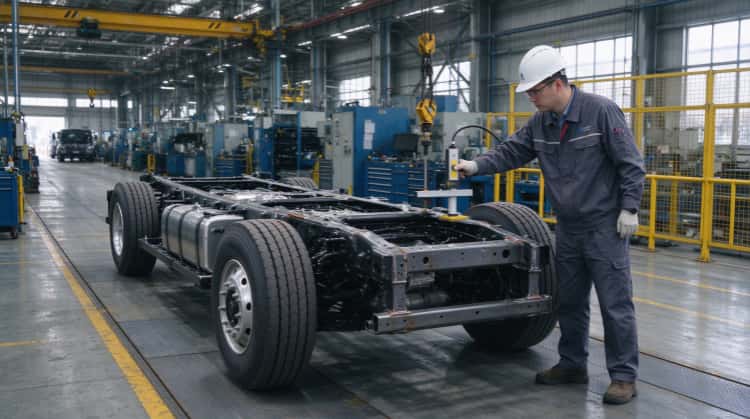
The entire quality control system starts before any disassembly work begins. Not every retired heavy vehicle is qualified for industrial reman workflow. Strict pre-screening eliminates structurally damaged, fatigued, or accident-affected base units to ensure only eligible cores enter the production workflow.
Professional screening covers structural integrity, operational history verification, frame deformation detection, and preliminary system health diagnosis. Units with severe collision damage, fire corrosion, long-term extreme overload fatigue, or irreversible frame torsion are directly rejected. This step prevents unqualified base assets from entering subsequent processes, avoiding hidden quality risks at the source.
All screening data is recorded and archived, forming the first traceable record of the reman units’s quality lifecycle.
Full Disassembly & Classified Industrial Cleaning
Unlike partial overhaul or selective repair, standardized reman workflow requires 100% full disassembly of all assemblies, systems, and component units. Full disassembly ensures no hidden wear, internal carbon deposits, aging seals, or micro-fatigue remains undetected.
After disassembly, all components undergo classified industrial cleaning. Heavy carbon buildup, oil sludge, rust layers, and surface oxidation are completely removed through professional industrial cleaning processes. Cleaned components provide accurate and reliable conditions for subsequent precision measurement and defect detection.
Cleaning is not a cosmetic step; it is a necessary quality prerequisite to expose invisible component defects that cannot be observed on dirty surfaces.
Precision Component Measurement & OEM Tolerance Calibration
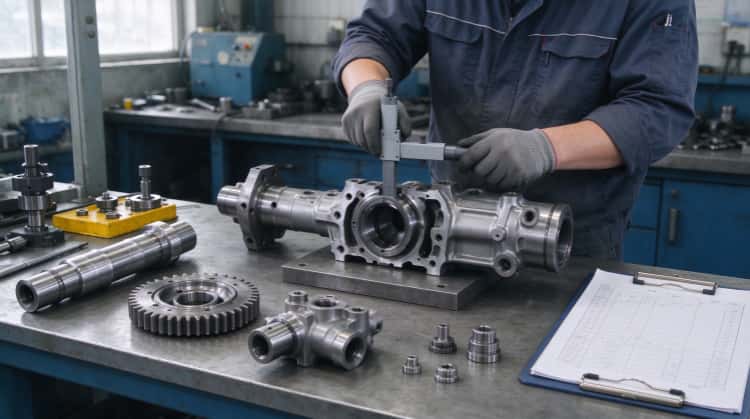
This stage is the core of industrial reman quality control. All key mechanical components are measured with precision testing tools against original OEM design tolerance values. Professional reman systems do not rely on visual judgment or manual experience.
Each component is categorized strictly into three grades: qualified for direct reassembly, qualified after precision regeneration, and unqualified for scrapping. Worn clearances, deformed dimensions, thread wear, gear tooth loss, and shaft runout data are all digitally recorded.
Only components that meet or restore OEM tolerance standards can continue into reassembly. Any part exceeding design limits is scrapped or professionally regenerated, ensuring the final assembled asset achieves factory-level mechanical precision.
Targeted Component Regeneration & Standardized Replacement
Standardized reman workflow balances resource efficiency and quality stability. Instead of replacing all parts blindly or reusing all old parts recklessly, the system implements targeted regeneration and graded replacement.
Structural substrates with stable mechanical performance are precisely repaired and surface-regenerated to restore original design accuracy. All vulnerable wearing parts, aging sealing systems, elastic components, and electrical aging parts are fully replaced with standard-specification components.
This mechanism ensures the finished asset retains the original reliable structural strength while eliminating all aging and failure-prone components, achieving a perfect balance of structural durability and operational stability.
Standard Torque Reassembly & System Matching Calibration
Reassembly in standardized reman workflows follows unified industrial assembly specifications. Every bolt, connecting part, and assembly interface is tightened according to OEM standard torque values, avoiding uneven stress, loose assembly, or excessive compression caused by irregular manual operation.
After mechanical reassembly, the entire vehicle system undergoes comprehensive matching calibration, including powertrain matching, hydraulic system coordination, braking system synchronization, and electrical system parameter reset. System calibration eliminates performance drift caused by component replacement and ensures overall vehicle coordination consistency.
Multi-Stage Bench Testing & Simulated Load Inspection
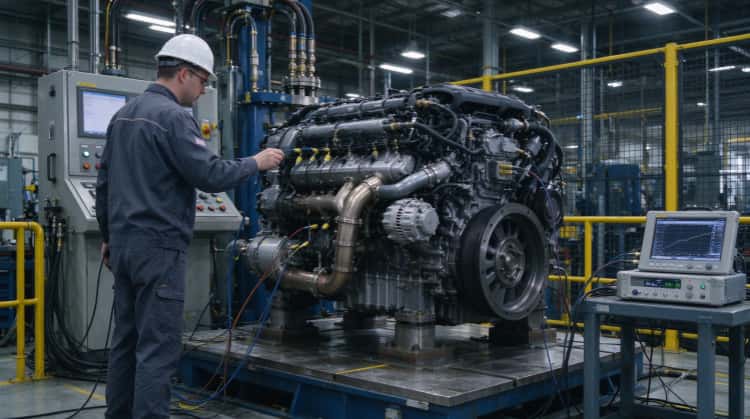
No reman units leaves the production line without passing multi-layer functional testing. Professional industrial reman quality control includes independent bench testing of core assemblies and full vehicle simulated load testing.
Each key assembly operates on professional test benches to verify power output, pressure stability, transmission smoothness, and operational temperature under no-load and standard-load conditions. After assembly completion, the whole vehicle undergoes continuous simulated heavy-load operation to verify stability under long-duration high-intensity working conditions.
All abnormal vibrations, pressure fluctuations, power attenuation, and system delays are corrected in the testing phase, ensuring zero latent operational faults before delivery.
Final Factory Inspection & Quality File Archiving
The final quality gate is comprehensive factory acceptance inspection. Inspectors verify appearance standardization, assembly consistency, functional stability, safety performance, and parameter compliance one by one according to reman quality checklists.
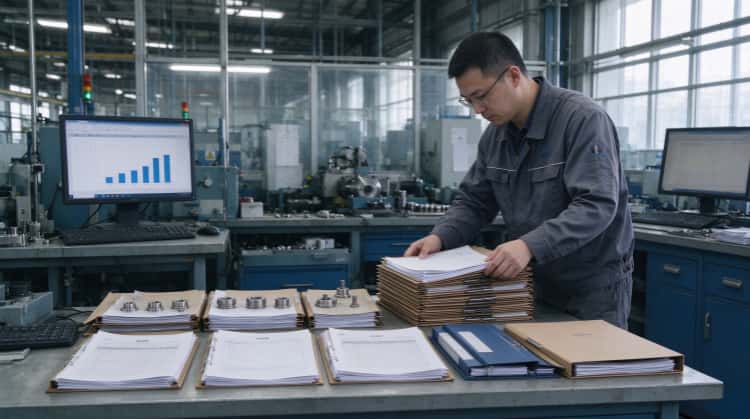
More importantly, all process data is fully archived, including base unit screening records, disassembly logs, component measurement data, regeneration reports, replacement part lists, bench test data, load simulation results, and final acceptance reports. This complete file system forms traceable quality credentials for each reman asset.
Why This Full Workflow Defines Real Industrial Reman Quality
Most low-end market renovation only retains the final assembly result without standardized process control. Such informal processes cannot eliminate hidden defects, cannot guarantee consistent performance, and cannot provide verifiable quality basis.
The standardized industrial reman workflow turns quality control from “result inspection” into “full-process intervention”. Every step has standards, every component has data, and every asset has complete archives. This systematic quality system is the fundamental reason why certified reman assets achieve stable, near-new performance in long-term heavy-duty fleet operations.
Conclusion
Industrial remanufacturing quality is not determined by appearance finishing or partial part replacement. It relies on a complete, closed-loop industrial workflow covering screening, disassembly, precision detection, regeneration, standardized assembly, multi-stage testing, and full data archiving.
For professional fleet buyers, recognizing and verifying this standardized quality control system is the key to distinguishing genuine industrial reman units from low-grade market refurbishment, ensuring long-term fleet operational safety and stable asset value.