
What Is Industrial Remanufacturing? Full Definition & Core Principles
Introduction
In the global heavy equipment industry, asset lifecycle management has become one of the most critical factors determining fleet profitability, operational stability, and sustainable development. While new equipment delivers stable performance, it carries extremely high capital pressure and rapid early depreciation. Ordinary used equipment lowers entry costs but introduces unpredictable failure risks and hidden financial losses.
As a result, industrial remanufacturing has emerged as a formal, verified, and industry-recognized asset regeneration solution for construction, mining, and logistics fleets worldwide.
Many industry outsiders and junior procurement teams misunderstand industrial remanufacturing as “second-hand renovation” or “part assembly.” In fact, professional industrial remanufacturing is a rigorous, process-driven manufacturing system, not a repair service. This article explains the authoritative definition, core principles, and industrial value of modern heavy-duty remanufacturing.
Official Definition of Industrial Remanufacturing
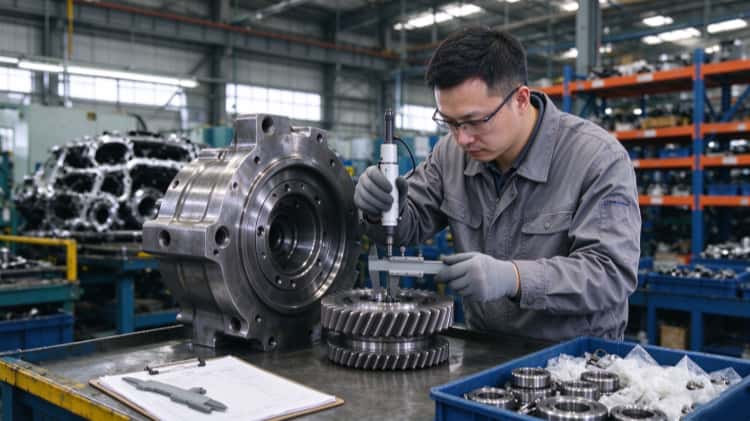
Industrial remanufacturing is a standardized circular manufacturing process that restores retired or high-mileage heavy equipment to original OEM performance tolerances through full disassembly, precision inspection, component regeneration, systematic reassembly, and multi-level performance verification.
Unlike traditional maintenance, which fixes existing faults, industrial remanufacturing eliminates latent faults, restores degraded structural and mechanical performance, and returns the asset to a verified, near-new operational state. Every procedure follows fixed industrial standards rather than subjective workshop experience.
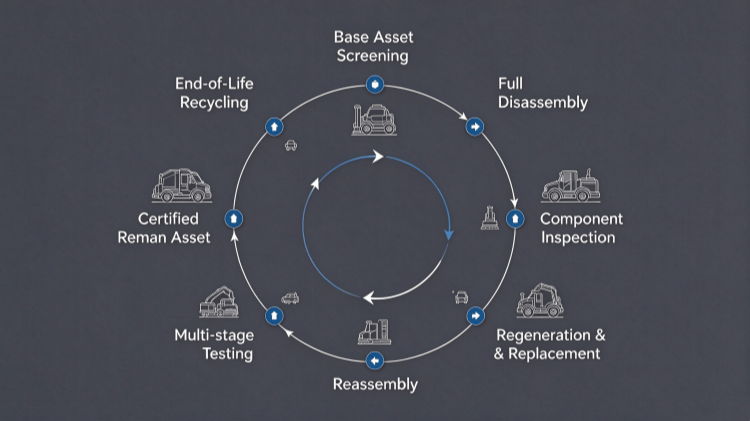
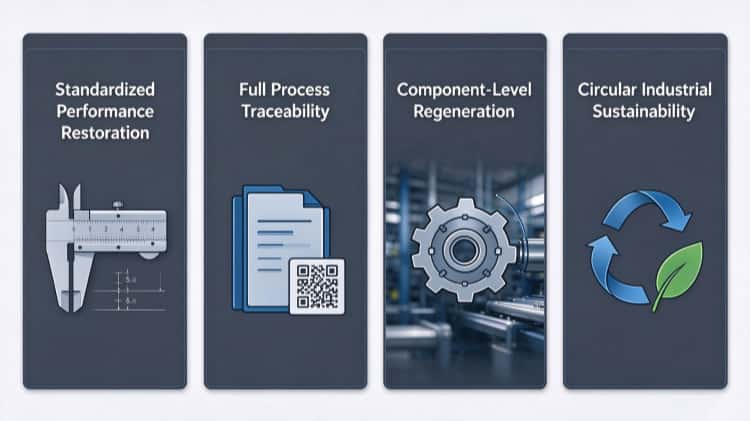
The Four Core Principles of Industrial Remanufacturing
Standardized Performance Restoration
The ultimate goal of remanufacturing is not “to make the machine work” but “to restore factory-level performance.” All key indicators, including power output, mechanical clearance, hydraulic stability, braking accuracy, and system matching, must meet original design specifications. This principle fundamentally distinguishes certified reman from casual repairs.
Full Process Traceability
Professional industrial remanufacturing requires complete archival records. Base unit screening reports, component inspection data, wear tolerance records, replacement part logs, bench test results, and final functional verification data are fully documented. Every reman asset carries an auditable lifecycle record, ensuring transparent quality.
Component-Level Regeneration
Remanufacturing evaluates every component individually. Qualified parts are precision-machined and restored; worn parts are replaced; fatigued parts are scrapped. This component-based screening mechanism ensures no hidden wear remains in the finished asset.
Circular Industrial Sustainability
By reusing qualified original chassis and structural components, industrial remanufacturing drastically reduces raw material consumption, energy waste, and carbon emissions compared to new equipment production. It is the only heavy-asset regeneration model that combines economic benefits and ESG compliance.
Why Remanufacturing Is Not Refurbishment or Repair
General repair only solves visible failures. Refurbishment focuses on exterior cleaning, repainting, and minor cosmetic improvements. Neither process involves full disassembly, tolerance measurement, system testing, or quality certification.
Standard industrial remanufacturing targets the root of equipment aging: internal component wear, mechanical fatigue, system degradation, and performance drift. It rebuilds the entire asset from the inside out, delivering long-term operational stability that superficial renovation cannot achieve.
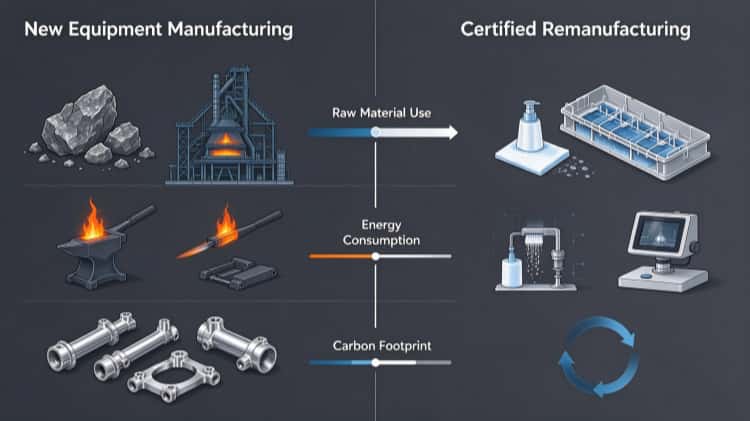
Industrial Reman vs New Equipment Manufacturing — Resource & Economic Comparison
Many fleet stakeholders overlook one critical fact: remanufacturing is not a substitute for new equipment — it is an independent industrial manufacturing model with unique resource and economic advantages.
New equipment manufacturing relies on raw material smelting, forging, stamping, and full assembly. It consumes massive mineral resources, industrial water, and electricity, while generating large carbon footprints. For heavy-duty commercial vehicles and engineering equipment, the structural chassis, metal frame, and main load-bearing components retain long residual service life even after high-mileage operation.
Industrial remanufacturing retains all qualified original structural substrates. Instead of rebuilding assets from raw ore, it only regenerates and replaces worn moving parts, sealing systems, and degraded electrical components. Data from global circular industry institutions shows that standardized reman saves over 60% of industrial energy and reduces more than 70% of raw material consumption compared with new manufacturing.
Economically, this resource advantage translates directly into lower capital costs for end users. certified reman assets avoid the huge industrial premium embedded in new equipment pricing, while retaining factory-grade performance standards. This makes reman the most balanced solution for mid-cycle project fleets that pursue both stability and cost control.
Standard Reman Boundaries: What Can and Cannot Be Remanufactured
A true standardized reman system has strict access boundaries — not every retired heavy asset is eligible for industrial remanufacturing. Clarifying these boundaries helps fleet buyers distinguish formal reman products from randomly assembled low-quality renovated equipment.
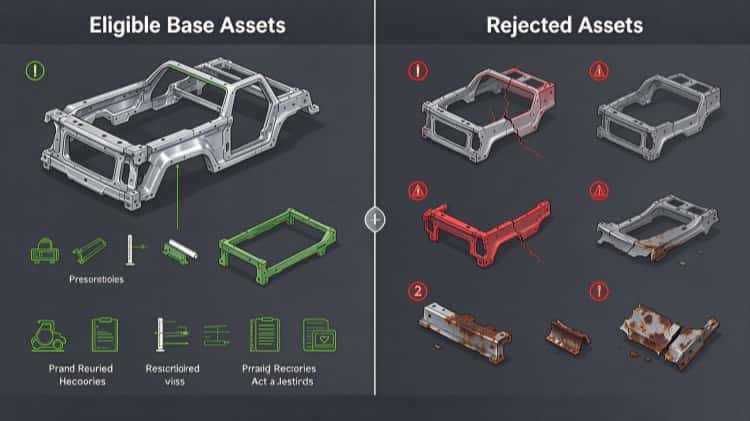
Eligible base assets for industrial reman
- Complete chassis with no irreversible structural fracture or severe deformation
- Load-bearing components with recoverable mechanical performance
- Equipment with normal historical operation without major crash or fire damage
- Core assembly structures that still meet basic OEM design strength
Ineligible assets strictly rejected by standard reman workflow
- Units with frame fracture, permanent torsion or structural failure
- Equipment with severe corrosion, fire damage or crash impact deformation
- Assets with long-term extreme overload leading to overall metal fatigue
- Obsolete models with completely discontinued supporting industrial standards
This strict screening boundary is the core reason why certified reman assets maintain stable durability. Only qualified base units can enter standardized disassembly, regeneration and testing procedures to form reliable finished certified reman assets.
Industrial Value for Modern Fleet Operators
For project-based fleets, industrial remanufacturing solves the traditional asset dilemma: new equipment is too capital-intensive, while used equipment is too risky. Certified reman assets balance near-new performance, controlled upfront cost, predictable maintenance cycles, and stable residual value.