Professional Fleet Procurement Checklist for Remanufactured Assets
Introduction
Fleet procurement for heavy-duty remanufactured assets differs drastically from buying ordinary second-hand trucks. For many procurement teams, the biggest challenge is separating genuine certified industrial remanufacturing from cosmetic workshop refurbishment. Without a structured evaluation framework, buyers risk accepting assets with hidden structural fatigue, incomplete component inspection, missing test records and unreliable rebuild quality.
A standardized procurement checklist enables fleet managers to conduct objective, repeatable assessment during supplier audits and vehicle inspections. It shifts purchasing decisions away from subjective visual impressions or low price temptation, and grounds evaluation on verifiable evidence, quality documentation and compliance validation. This professional checklist is tailored for construction, mining and long-haul fleets evaluating remanufactured assets, covering pre-purchase supplier qualification, core asset inspection, documentation audit, performance verification and post-handover terms.

Supplier Qualification Check (Before Inspecting Individual Assets)
Before reviewing any remanufactured assets, the fleet procurement team must validate the remanufacturer’s overall capability. A high-quality asset can only come from a standardized, qualified reman operation.
- Confirm whether the supplier follows formal industrial reman workflows, rather than ad-hoc repair or surface repainting. Request workflow documentation showing full disassembly, component grading and multi-stage testing protocols.
- Verify the qualification of technical inspectors, especially NDT technicians. Check relevant certification credentials for non-destructive testing to ensure structural defect inspection is performed by competent personnel.
- Confirm the supplier’s traceability system: every certified remanufactured assets must carry a unique ID binding all production records. Confirm digital archive storage and long-term data retention policy.
- Review supplier warranty framework and aftersales response terms. Clarify coverage scope, excluded items, service response time and global support capacity for fleet operations.
- Check supplier references: contact existing fleet clients to gather real-world feedback on uptime, failure frequency and after-sales support of their certified remanufactured assets.
Base Core & Structural Integrity Verification
Structural integrity is the highest-priority inspection item, as frame, axle and weld failure creates severe safety and financial risks.
- Review the base core screening report: confirm the original vehicle was rejected if it suffered major collision, fire damage, frame torsion or extreme long-term overload fatigue.
- Require complete NDT reports for all critical structural components: chassis frame, axle housing, steering knuckles, suspension brackets and key weld seams. Reports should include defect location, measurement data and pass/fail conclusions.
- Visually cross-check structural repair works. All repaired welds must have post-repair NDT re-inspection records. No hidden grinding or paint covering of unrepaired cracks is permitted.
- Measure frame dimensional tolerance to confirm no residual deformation. Compare measured values against OEM design specifications.
Powertrain & Key Component Inspection
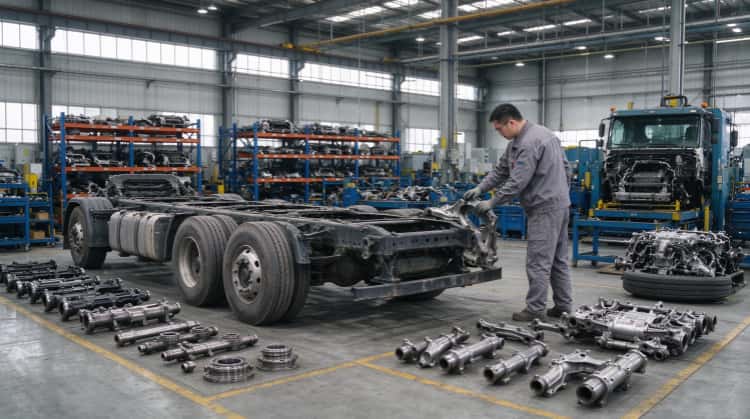
Powertrain reliability directly determines uptime and fuel economy for heavy-duty operations.
- Request component grading records: every disassembled part must be classified as reusable, regenerable or scrapped. Confirm over-limit worn parts are discarded instead of being reassembled.
- Check replacement parts documentation: new or regenerated components should have batch numbers, supplier certificates and specification matching the original OEM requirements.
- Verify bench test reports for engine, transmission and axle assemblies. Check power output, torque curve, operating temperature, pressure stability and noise indicators from bench testing.
- Confirm engine calibration and fuel system tuning. Ensure reman powertrain is calibrated to maintain stable fuel consumption under continuous heavy load.
Traceability & Full Lifecycle Documentation Audit
Documentation is the proof of reman quality; verbal commitments hold no audit value for professional fleets.
- Confirm a unique asset identifier is assigned to the vehicle, linking all process records from core intake through final factory acceptance.
- Audit the complete record package: core intake screening log, disassembly records, component measurement sheets, NDT reports, parts replacement list, assembly torque records, bench and load test data, final factory acceptance checklist.
- Validate that all test failures and corrective actions are recorded. A quality reman file will document detected defects, repair actions and re-test results, rather than only showing final pass certificates.
- Confirm the buyer can retain access to digital traceability archives after delivery, for asset management, insurance audit and future resale.

Full-Vehicle Performance & Functional Testing Verification
Paper records must be validated by real functional testing before acceptance.
- Review full vehicle simulated load test reports, mimicking the actual working load your fleet will encounter on mining or construction sites.
- Test braking system performance, including brake balance, response speed and sustained braking stability.
- Inspect hydraulic system function for dump trucks or trailer units, checking pressure holding capacity and leak-free operation.
- Inspect electrical systems, wiring harness, sensors and ECU function. Confirm no intermittent electrical faults.
- Conduct road or in-site trial operation to assess vibration, shifting smoothness, temperature stability and abnormal noise.
Commercial & Contract Terms Checklist
Technical validation should be paired with clear contractual terms to avoid post-delivery disputes.
- Confirm warranty coverage scope, warranty duration, operating hour limits and excluded failure modes. Clarify whether structural components and powertrain assemblies are separately covered.
- Confirm acceptance criteria in writing: define inspection standards, testing items and rejection rules before vehicle handover.
- Clarify spare parts supply channel, lead time and pricing for routine and emergency replacements.
- Confirm asset ownership documentation, export compliance paperwork and certification required for your operating region.
- Negotiate asset residual value clauses if your fleet plans to resell or trade in the remanufactured assets after project completion.
On-Site Final Acceptance Checklist Before Handover
This is the final step before taking delivery of certified remanufactured assets:
- Cross-check the VIN and unique reman ID on the vehicle against all documentation packages.
- Randomly spot-check key component labels and batch numbers against parts replacement logs.
- Confirm all NDT and performance test reports match this specific asset.
- Complete vehicle visual inspection for assembly quality, sealing conditions and fluid leakage.
- Run short functional test of all systems on-site.
- Receive both physical document package and access credentials for digital traceability system.
- Sign acceptance documentation only when all checked items meet pre-agreed standards.
Key Red Flags To Reject A Remanufactured Assets During Procurement
Fleet procurement teams should treat these warning signs as immediate rejection triggers:
- Supplier cannot provide NDT reports for frame and critical structural parts, only visual inspection statements.
- Missing or inconsistent records, documents cannot be linked to this specific vehicle ID.
- Refusal to allow on-site inspection, third-party audit or witness testing.
- Major structural repairs without post-repair NDT re-verification.
- Worn out-of-tolerance components reused without proper regeneration and certification.
- Warranty terms vague, no written aftersales commitment for structural failure.
Conclusion
Procurement of certified remanufactured assets should never rely only on price comparison or surface appearance. This professional checklist creates a systematic evaluation framework to audit suppliers, inspect structural integrity, verify component quality, validate traceability documents and lock down clear contract terms.
For fleet operators, using this checklist minimizes safety risks, reduces unexpected downtime, protects long-term asset residual value and ensures the purchased certified remanufactured assets match your project’s operational requirements. The checklist transforms reman procurement from risky guesswork into standardized, auditable asset investment decision-making.