
How to Avoid Common Fleet Procurement Traps in the Used Equipment Market?
Introduction
For construction, mining and logistics fleets, used heavy equipment often appears attractive at first glance thanks to low upfront pricing. However, the second-hand market is filled with hidden pitfalls that can rapidly erode budget, trigger unplanned downtime and even cause catastrophic safety failures. Many fleet procurement teams fall into traps driven by superficial visual checks, incomplete seller disclosures, confusing definitions between refurbished, rebuilt and remanufactured equipment, and missing quality documentation.
Low sticker price does not equal low total cost of ownership. Assets that seem cheap on paper may carry hidden structural fatigue, undisclosed accident history, worn powertrain components and expired service parts. These issues usually emerge after delivery, bringing costly emergency repairs, project delays and potential safety hazards. This article breaks down the most prevalent fleet procurement traps in the used equipment market, explains how to spot warning signs early, and outlines practical strategies for fleet buyers to make safer, more rational purchasing decisions.

The “Cosmetic Refresh” Trap: Paint and Surface Repair Mask Severe Internal Defects
This is one of the most common tricks within the used heavy vehicle marketplace. Sellers carry out surface cosmetic renovation: repaint frames, clean up oil leaks externally, replace damaged body panels and polish the cab. After cosmetic work, the equipment looks nearly new, while critical underlying defects remain untouched.
Hidden problems may include subsurface fatigue cracks on frame welds, corroded metal sections, out-of-tolerance powertrain clearances, degraded hydraulic seals and internal component wear. Paint can cover cracks and corrosion, and simple surface cleaning hides persistent oil seepage. Visual inspection alone cannot uncover these invisible risks.
How to avoid it: Never judge asset condition by appearance. Require non-destructive NDT testing reports for all critical structural parts. Conduct full component inspection instead of only checking external surfaces. Focus on measurable dimensional data and test results rather than cosmetic finish.
Misleading Terminology Trap: Confusing Refurbished, Rebuilt and Certified Remanufactured Assets
Market sellers frequently misuse technical terms to inflate product value. Words such as “rebuilt”, “reconditioned” or “remanufactured” are often used interchangeably, but these terms represent vastly different standards.
Basic refurbishment normally means fixing only broken visible parts and cleaning the vehicle, without full disassembly, systematic component grading or standardized load testing. Rebuild may refer to partial replacement of failed assemblies. Genuine remanufacturing demands full disassembly, component sorting, NDT inspection, regeneration or scrapping of worn parts, reassembly according to OEM torque standards, multi-stage bench and load testing, plus complete traceability archives.
Many used equipment vendors label simple refurbishment work as remanufacturing to justify higher pricing, while skipping most quality control gates.
How to avoid it: Clarify definitions before negotiation. Ask sellers to detail their workflow: whether the asset undergoes full disassembly, component NDT screening and full load testing. Request complete traceability records. If the supplier cannot provide itemized inspection data, it is most likely only cosmetic refurbishment.
Undisclosed Damage & Abuse Trap: Hidden Collision, Fire or Overload History
A large share of second-hand heavy equipment has experienced severe operational abuse or accident damage. Heavy trucks may have endured long-term overloading, frame twisting, rollover damage, fire incidents or deep impact collisions. Sellers often repair visible damage and withhold this history from buyers.
Even after repairing bent frames or broken axles, residual metal fatigue remains inside structural steel. These hidden defects will propagate rapidly under heavy site loads, which may lead to sudden structural failure. Ordinary maintenance records often omit major accidents or overload abuse.
How to avoid it: Verify the full operational history of the base unit. Perform frame dimensional inspection and comprehensive NDT scanning for all high-risk structural components. Cross-check historical mileage, operating environment and maintenance logs. Watch for inconsistent repair traces, uneven paint layers and mismatched replacement parts.
Low Price Trap: Focusing Solely On Upfront Cost While Ignoring Long-Term TCO
Many fleet procurement teams prioritize the lowest purchase price as the primary decision metric. This narrow evaluation ignores the full lifecycle cost. A cheaper used asset may need frequent repairs, consume extra fuel and depreciate faster. Cumulative maintenance expenses and downtime losses can far exceed the initial purchase savings.
Downtime carries enormous hidden costs for fleets: idle operators, halted site operations, delayed material transportation and contract penalties. A cheap truck breaking down in the middle of a mining project can cause losses many times higher than the vehicle’s purchase price.
How to avoid it: Adopt Total Cost of Ownership (TCO) analysis instead of price-only comparison. Calculate expected maintenance frequency, fuel consumption, projected downtime risk, residual value and warranty coverage. Compare multiple assets on a multi-year TCO basis rather than only comparing sticker prices.
Incomplete Documentation Trap: Missing Traceability, Test Reports and Ownership Papers
Used equipment transactions often lack complete, auditable documentation. Sellers may provide basic registration paperwork but no component inspection logs, test records or proof of repair quality. Without traceable records, buyers cannot verify what repairs were completed, which parts were replaced and whether structural inspections passed.
Lack of documentation also hurts future asset resale value. When your fleet resells the equipment later, subsequent buyers will apply heavy risk discounts without formal inspection records. In some cross-border transactions, incomplete export compliance documents can cause customs detention and unexpected fines.
How to avoid it: Build documentation requirements into your fleet procurement checklist before purchase. Request test reports, NDT records, parts replacement logs and repair history. Confirm ownership transfer documents and regional compliance certificates. For certified reman equipment, require access to the unique-ID traceability system.
Vague Warranty Trap: Ambiguous Terms and Hidden Exclusions
Warranty statements in the used equipment market are often deceptively simple. Promises such as “6-month warranty” may contain many unstated exclusions. Common loopholes exclude structural failure, overload damage, wear parts, hydraulic assemblies or engine defects. When breakdowns happen, sellers deny claims citing these hidden clauses.
Some vendors only offer verbal warranty commitments with no written contract terms. Verbal promises have no binding force once the transaction finishes.
How to avoid it: Require a formal written warranty contract. Clarify covered assemblies, warranty duration, operating hour limits, excluded failure modes, claim procedures and after-sales response time. Confirm structural components and powertrain coverage explicitly. Reject vague verbal guarantees.
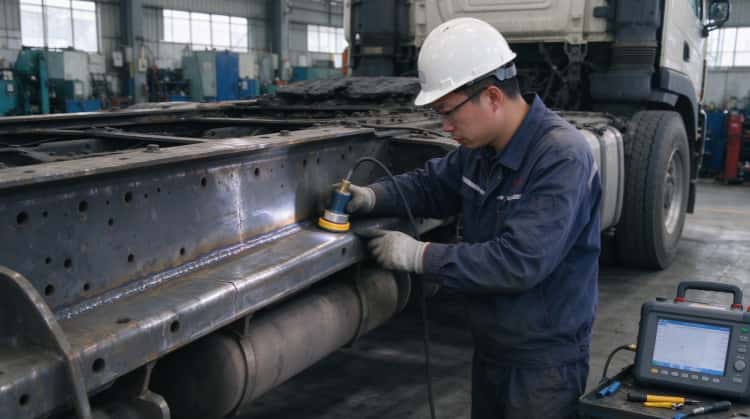
Inadequate Inspection Trap: Skipping Independent Third-Party Verification
Many buyers rely entirely on seller-provided inspection reports or quick visual walkarounds. Seller-generated reports carry inherent bias, and surface checks cannot capture subsurface metal fatigue. Some buyers also skip on-site witness testing, accepting equipment based only on photos or video supplied by sellers.
Remote photos and videos can be selectively edited to hide leaks, cracks and abnormal noise. Short test runs under light load cannot expose defects that only emerge under continuous heavy working conditions.
How to avoid it: Arrange independent third-party inspection if internal technical capacity is limited. Conduct on-site witnessing of load testing. Deploy your own technical team to inspect the vehicle, especially core structure and powertrain assemblies. Never complete procurement based only on marketing photos and videos.
Key Warning Red Flags
Stop procurement evaluation immediately if you encounter any of these warning signs:
- Seller refuses NDT inspection for frame and key structural components
- Unable to provide asset history or traceability records linked to the specific VIN
- Avoids third-party audits or on-site load witnessing
- Describes refurbished equipment as reman equipment without supporting workflow proof
- Warranty terms remain vague and resist formal written contract wording
- Obvious patch repair traces with no post-repair inspection documentation
- Pressures rapid purchasing decisions with limited-time discount tactics

Conclusion
The used heavy equipment market contains numerous procurement traps built around cosmetic trickery, misleading terminology, hidden damage, incomplete paperwork and vague warranty terms. Successful fleet procurement requires shifting from price-first buying to systematic risk assessment.
By verifying asset history, demanding objective test data, conducting structural inspection, auditing documentation and calculating full TCO, fleet operators can filter high-risk second-hand assets. This approach helps fleets avoid unexpected repair bills, costly downtime and safety hazards. When comparing options, certified reman equipment with complete traceability and standardized quality controls offer a balanced alternative, with transparent records and predictable long-term performance for industrial fleets.