
Why Certified Remanufacture Creates Clear, Comparable Benchmarks When Evaluating Fleet Unit Performance?
Intro
Comparing performance between ordinary used trucks is often misleading. Each unit has a unique unknown history, different prior repairs and uneven residual wear. A truck’s poor fuel efficiency or frequent downtime may stem from old hidden damage, not how it is operated. REMAN ROAD certified remanufacture sets a uniform starting point for every rebuilt chassis, so fleet leaders can draw fair, actionable comparisons between units in the fleet.
Identical rebuild baseline removes hidden quality variance
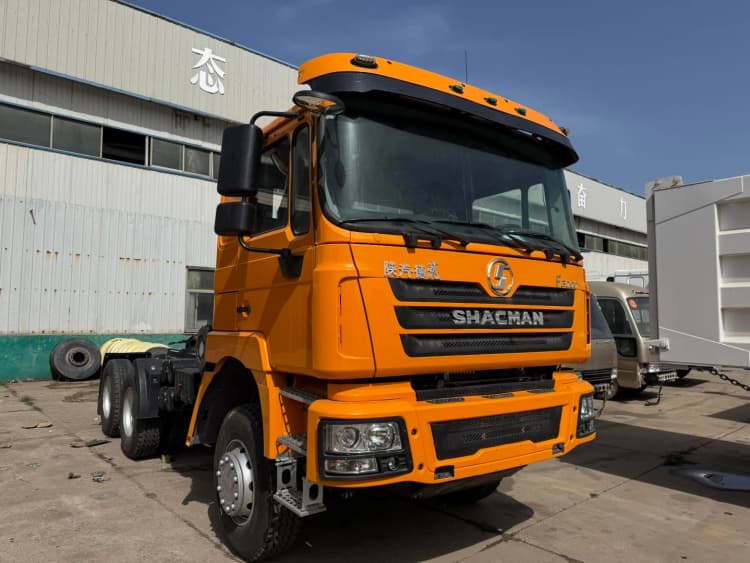
All reman trucks of the same model follow the same rebuild checklist, tolerance limits and pre-delivery testing. Core assemblies, braking systems, hydraulics and engine calibration are restored to consistent standards. Unlike used or ad-hoc overhauled trucks, there is no random variation from patch repairs or unrecorded component degradation. When two reman trucks show different performance metrics, the difference is far more likely to come from route, payload, driver behaviour or site conditions, rather than pre-existing mechanical defects.
Shared service intervals simplify cost comparison
Standardised certified remanufacture comes with aligned hour-based maintenance schedules. Planned service events, expected consumable lifespans and recommended replacement parts are consistent across the fleet. Finance and operations teams can directly compare maintenance spend per operating hour. This makes it easy to spot outliers: a truck consuming more parts or requiring extra service can be flagged for review, rather than writing the difference off as “normal used-truck variability”.

Uniform test data provides a common reference point
Every certified reman truck carries a dossier with load test, dyno and hydraulic performance results captured at the point of rebuild. These baseline readings serve as a fixed reference. As the trucks work, telemetry and operational data can be measured against this shared starting benchmark. Trends such as falling fuel economy or extended brake stopping distance become easier to detect early, and comparisons are not skewed by unknown starting condition.
Consistent residual value assumptions level the TCO comparison
TCO evaluation relies heavily on depreciation forecasts. Unverified rebuilds have unpredictable residual value, which distorts profitability comparisons. With certified remanufacture’s traceable records, depreciation modelling uses the same set of assumptions across comparable units. This lets managers rank trucks on true economic performance, not just random resale value risk.

Final takeaway
Certified remanufacture enables fair, reliable fleet performance benchmarking by establishing a uniform rebuild baseline, shared service rules and auditable pre-delivery test data. It removes the noise of unknown prior condition, so operators can accurately compare uptime, fuel consumption and maintenance cost to guide fleet assignment and improvement decisions.