
Why Heavy Duty Remanufacturing Is Ideal For Short-Term Infrastructure Framework Contracts?
Intro
Short‑term infrastructure framework contracts — roadworks, site earthmoving, quarry support and temporary haulage — share a core commercial constraint: the fleet is only required for a defined, limited window. Buying new heavy trucks locks capital into multi‑year assets that will still hold finance, depreciation and fixed overhead long after the contract ends. Generic used trucks carry unquantified breakdown risk that can trigger penalties and lost profit. Verified heavy duty remanufacturing fills this gap: it delivers a validated safety and performance baseline, built to standardised QA rules, with traceability and warranty aligned to the contract’s fixed term.
Why reman fits short‑term infrastructure framework contracts?
Matches asset holding period to the contract timeline
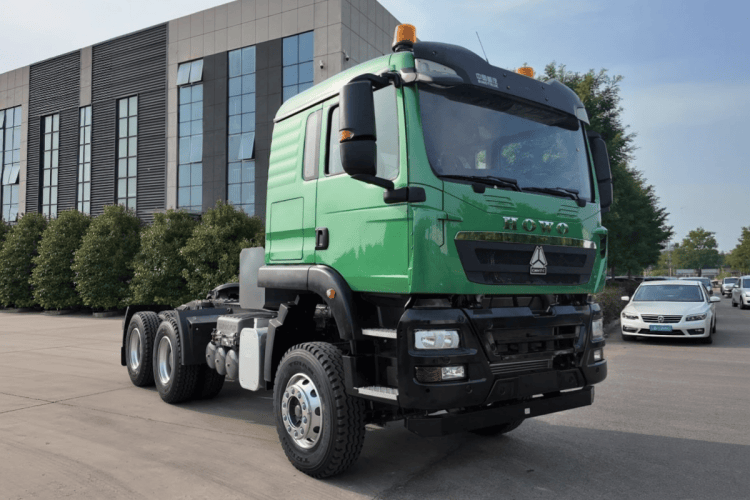
Framework agreements are often 1–3 years, with no guarantee of extension. New trucks are economic assets built for 5+ years of revenue. If the contract ends early, the contractor is left with illiquid high-value assets and financing obligations. Certified heavy duty remanufacturing has lower entry cost and a known residual value curve. At contract close, units can be resold, reallocated to another site or returned to the supplier with less capital loss. You only carry the asset cost for the window you generate revenue.
Reduces upfront capital lock‑up and preserves tender cash headroom
Infrastructure contractors often face tight cash flow, with large outlays for plant, labour, material and mobilisation. New chassis require substantial down payments or large finance commitments. Heavy duty remanufacturing’s lower capex requirement frees working capital for site execution, bond requirements and contingency. This is critical for tendering: you do not need to tie huge capital into standby and operational haul assets just to satisfy the framework’s fleet capacity requirement.
Shorter lead times support fast mobilisation
Infrastructure frameworks frequently require rapid mobilisation once the notice to proceed is issued. OEM new truck lead times can stretch many months, risking mobilisation delays and non‑compliance with contract KPIs. The REMAN ROAD heavy duty remanufacturing supply pool is built from pre‑screened cores, processed against a repeatable QC workflow. Validated heavy duty reman trucks can be available in far shorter timelines, helping you hit the site start date without waiting for factory production slots.
Standardised QA and warranty control downtime risk and liquidated damages
Short‑term frameworks carry strict delivery KPIs and heavy penalty clauses for delays. A single major breakdown can erase the margin on a site phase. Verified heavy duty remanufacturing includes mandatory NDT, component renewal, bench and loaded road testing, plus a defined warranty. Rebuild‑related failures are covered, with clear traceability to separate workmanship issues from site abuse. This reduces the need to price in a massive risk contingency, making your tender pricing more competitive.
Homogenised fleet simplifies site operation and maintenance
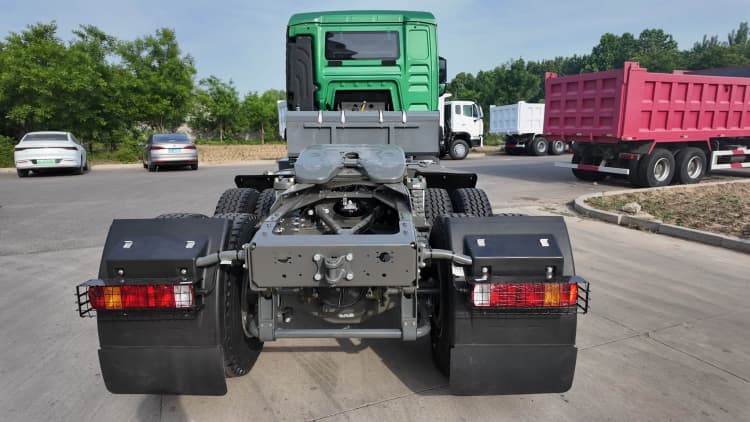
Site maintenance teams on temporary infrastructure projects are often lean, with limited time for complex troubleshooting. Same‑grade heavy duty reman trucks follow unified acceptance criteria, common service intervals and shared spare‑part requirements. The learning curve is low, inventory overhead is reduced, and swap‑out between primary and backup units is seamless. This is a major advantage for temporary sites where workshop support is limited.
Flexible scaling for variable framework call‑offs
Many infrastructure frameworks are call‑off based: volumes fluctuate as work packages are awarded, paused or rescheduled. Verified heavy duty remanufacturing lets you scale capacity up and down in modular increments. You do not need to commit to a fixed large fleet of new trucks for peak demand that may only last a few months. This avoids paying for idle capacity during low‑activity phases.
Audit-ready documentation for client ESG and tender reporting
Increasingly, public and private infrastructure frameworks require circular economy, carbon reduction and supply‑chain evidence. Each heavy duty reman trucks’s VIN dossier includes rebuild scope, scrap diversion data and embodied carbon savings. This documentation is auditable and can be submitted as part of contract sustainability reporting, a requirement that generic refurbished trucks cannot easily satisfy.
Boundary Note
Verified heavy duty remanufacturing is not a zero‑risk solution. It still requires routine maintenance, insurance and site‑appropriate duty grading. The advantage is that its risk and capital profile align to the temporary, fixed‑term nature of framework work, rather than the long‑life ownership model of new heavy trucks. It is unsuitable if the contract requires OEM emissions certification or factory‑new chassis specifications written as hard mandatory clauses.
Q&A
Q: Can warranty be tailored to exactly the framework duration? A: Yes. REMAN ROAD verified heavy duty remanufacturing can structure warranty terms to match the contract period, so coverage expires when the asset is no longer required on site.
Q: What if the framework is extended unexpectedly? A: Heavy duty reman trucks are flexible. Warranty can be extended, units can remain on site, or you can swap them out for alternative capacity as the programme evolves.
Q: How do I state this in a tender methodology? A: Certified verified heavy duty remanufacturing provide contract‑aligned fleet capacity, rapid mobilisation, lower capital exposure and auditable circular credentials, reducing downtime risk and protecting project margin for fixed‑term infrastructure delivery.