
How REMAN ROAD Unifies Standards Across the Global Heavy Vehicle Reman Ecosystem?
Introduce
The global heavy vehicle remanufacturing sector has long suffered from conflicting definitions, inconsistent inspection workflows and loose labelling rules. Refurbishment, overhaul and genuine reman are frequently mixed together, leaving fleet buyers, financiers and customs authorities with no reliable way to judge quality across borders.
REMAN ROAD works to close this gap by rolling out a unified, auditable standard framework that aligns distributed production hubs, inspection partners, reverse‑logistics suppliers, service nodes and asset owners — while preserving flexible adaptation for local operating conditions.
Establishing a single, clear baseline definition for heavy vehicle reman
Standardisation starts with shared terminology. REMAN ROAD sets a fixed, non‑negotiable definition of genuine heavy vehicle remanufacturing, explicitly separated from cosmetic refurbishment and partial overhaul. This baseline defines mandatory gates: full disassembly down to individual components, core eligibility screening, systematic NDT on fatigue‑critical parts, dimensional verification against OEM tolerances, compulsory replacement of all time‑limited consumables, dyno performance validation and formal traceability.
All partners in the ecosystem adopt this identical definition. This removes the ambiguity where one workshop calls an overhaul “remanufactured” while another follows strict industrial heavy vehicle reman rules. Every certified asset must satisfy the same core pass/fail criteria before receiving REMAN ROAD certification.
Standardised gate-by-gate workflow for all authorised reman hubs
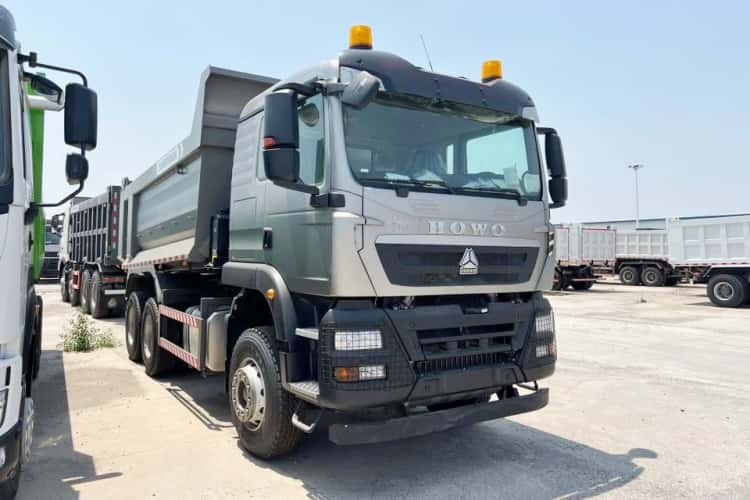
Authorised production hubs across different regions follow the identical sequential workflow checklist. Core intake verification, cleaning protocols, component sorting rules, machining limits, assembly torque specifications and final acceptance tests are documented in a shared operational manual. This means a reman Howo built at a hub in China is held to the same technical bar as one processed at a satellite facility serving Central Asia or East Africa.
Uniform workflow templates do not force identical local tuning. Regional teams may adjust engine calibration for low‑grade fuel, reinforce suspension for mine tracks or configure emission systems to meet local regulatory limits. These are application‑specific adaptations, not concessions that lower the core reman quality threshold.
Independent third-party audit to prevent self-certification
Internal process documents alone cannot create global trust. REMAN ROAD integrates independent engineering auditors into its standard system. Auditors conduct scheduled and unannounced site inspections, sample finished vehicles, review raw test records and verify that NDT reports, dyno logs and parts replacement manifests match what was actually performed on the production line.
If a hub repeatedly fails audit requirements, its authorisation to issue REMAN ROAD certificates is suspended. This external oversight makes the standard enforceable, rather than just promotional wording. It also gives tender evaluators, leasing firms and carbon auditors confidence that the standard is consistently applied.
Shared grading rules for core reverse logistics
A hidden source of quality inconsistency is uneven core acceptance. REMAN ROAD unifies core grading standards across its reverse‑logistics network. Partners use the same criteria to reject cores with frame cracks, collision twist, fire damage or irreversible overload deformation. Acceptable cores are classified by condition with standard grading labels that travel with the asset.
This stabilises upstream supply. A crankshaft or chassis frame qualified in one region meets the same fatigue and dimensional thresholds when shipped to another reman hub. It eliminates the practice of sending high‑risk, low‑grade cores into production at regional workshops with weaker screening.
Unified test metrics and performance benchmarks
Quantifiable performance targets are aligned across the network. Certified heavy vehicle reman powertrains must reach no less than 98% of OEM rated power, with consistent limits on oil pressure, smoke output and fuel consumption. Brake testing, chassis straightness, hydraulic function and road‑test acceptance criteria use the same measurement benchmarks. Digital twin simulation also runs on standardised duty‑cycle libraries, so pre‑production performance screening uses comparable models across all facilities.
Common metrics make cross‑unit comparison possible. Fleet buyers can evaluate qualified reman vehicle from different supply hubs against the same performance KPI, instead of interpreting custom, workshop‑specific test reports.
A shared digital traceability platform as the standard’s delivery layer
Paper records fragment easily once trucks cross borders. REMAN ROAD anchors its standardisation in a centralised traceability system. Every qualified reman vehicle gets a unique permanent ID linked to a standardised dataset: core intake forms, NDT certificates, dimensional rework logs, dyno curves, parts replacement manifests, road‑test results, warranty terms and LCA carbon‑saving statements.
Authorised stakeholders have role‑based access. Procurement teams, third‑party auditors, regional service centres, financiers and secondary‑market appraisers all read from the same structured record format. The standard therefore travels digitally with the asset, instead of staying locked inside the original factory. This supports portable warranty recognition, cross‑border collateral valuation and ESG reporting.
Aligned documentation and certification formats for tender & customs use
Different markets require different paperwork, but REMAN ROAD standardises the core certificate package. The certificate layout, test report structure and carbon statement template follow a unified format recognised across the ecosystem. This helps reduce friction in two high‑pain areas: green tender submission and customs clearance.
For tender auditors, the consistent document package proves that the asset qualifies as qualified reman vehicle rather than a refurbished used truck. For border authorities, the structured evidence creates a foundation for future mutual recognition agreements, helping resolve the common issue where reman vehicles are automatically classified as generic second‑hand goods.
Continuous standard iteration via cross-network performance feedback
Standards do not stay static. Regional service nodes and fleet operators feed real‑world failure data, terrain feedback and maintenance records back into the central system. Engineering teams analyse this in‑service data to refine NDT sampling ranges, fatigue limits and recommended component replacement rules. Updates are rolled out uniformly to all authorised hubs and audit partners.
This creates a closed improvement loop. The standard evolves based on actual heavy‑duty operating experience across Africa, Central Asia and other target markets, rather than relying only on static lab assumptions.
Closing
REMAM ROAD unifies global reman standards not by imposing rigid local operational restrictions, but by locking in a shared definition, repeatable production gates, independent oversight, common test benchmarks and portable digital proof. This framework helps the ecosystem overcome the fragmentation that has long limited cross‑border reman trade. It gives fleet buyers everywhere a consistent, trustworthy way to identify qualified reman vehicle, while laying the groundwork for wider acceptance of qualified reman in procurement, finance and regulatory systems.