
The Role of Circular Remanufacturing in Extending Heavy Asset Service Cycle
Introduction
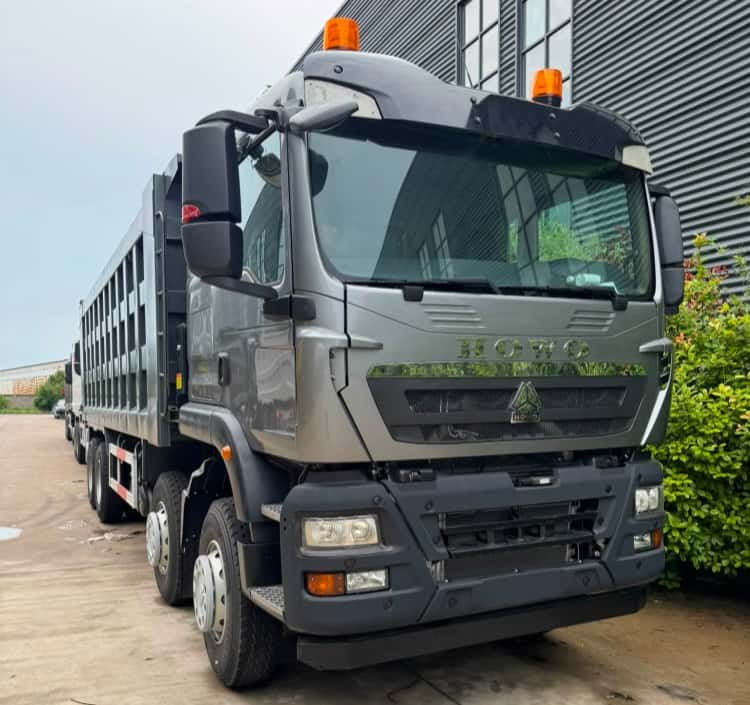
Heavy assets such as heavy-duty trucks are high-value capital goods. At the end of their first service cycle, traditional linear economy logic treats used vehicles as depreciated, low-value assets with limited remaining usable life. Most operators either sell them cheaply for scrap or basic overhaul.
Circular remanufacturing resets the asset’s technical state, restoring performance close to original new specification, and safely extends the service cycle. It is not a one-time patch-up repair, but a systematic industrial process built on circular economy principles. This article explains its core function, mechanism and practical value for fleet owners.
Core Definition: Reset Asset Lifecycle Instead of Patching Failures
Ordinary repair or overhaul only fixes broken components to get the truck running again. It does not address all fatigued parts that will fail later. Circular remanufacturing’s lifecycle extension logic:
- Full disassembly of the whole vehicle down to individual components
- Sorting, inspection and grading of every part; discard components that exceed fatigue or corrosion limits
- Recovering reusable metal substrates through machining, welding and surface restoration
- Mandatory replacement of all fatigue-limited consumables (bearings, seals, gaskets, hoses, piston rings)
- Reassembly, bench testing, NDT structural inspection and full vehicle road validation
- The asset gets a new service cycle clock, not just temporary operation.
The service cycle is not merely “added a few years”. The asset’s baseline reliability is reset, creating a second usable lifecycle for site haulage, construction and mining projects.
Three Key Mechanisms That Extend Heavy Asset Service Cycle
Eliminate hidden accumulated fatigue damage
Heavy trucks accumulate invisible damage over years of vibration, shock loading and corrosion: micro-cracks on frame, crankshaft, weld joints, metal fatigue in suspension brackets. Linear maintenance only responds after parts break. Circular remanufacturing uses NDT and thickness testing to detect hidden fatigue defects before failure. Damaged parts are repaired or replaced, preventing catastrophic failure that would prematurely end the asset’s life.
Recover core component performance to near-new standard
Critical assemblies — engine, axle, hydraulic system — are rebuilt to OEM dimensional tolerances. Worn surfaces are machined, reconditioned or replaced. Dynamometer testing verifies power, torque and fuel consumption. This restores the asset’s functional performance, so it can safely carry rated payload through another multi-year project cycle.
Standardised corrosion treatment and structural reinforcement
Corrosion is the main silent killer of steel heavy assets. Circular remanufacturing includes full blast rust removal, structural reinforcement for high-stress zones and multi-layer anti-corrosion coating. This stops ongoing corrosion progression, preserving chassis structural integrity for the extended service period.
Circular Remanufacturing Preserves Embodied Carbon & Embedded Material Value
In linear economy: once the first lifecycle ends, scrapping the truck means losing all the carbon and raw material invested in steel casting, forging and component manufacturing.
- Remanufacturing retains the original high-value metal substrate (chassis frame, axle housing, engine block)
- Only replace worn small parts, cutting raw material consumption and carbon emissions vs building a brand-new truck
- The asset’s embodied carbon is amortised over two full service cycles, lowering carbon per operating hour
This is the core ESG value of extending heavy asset service cycles via circular remanufacturing.
Financial Value for Fleet Owners From Extended Asset Cycle
- Reduce frequency of large CAPEX purchases: Instead of buying new trucks every 4–5 years, remanufacturing lets the same base asset serve another full project cycle.
- Smooth depreciation curve: The original heavy depreciation of the first lifecycle is already absorbed. The extended cycle carries much lower annual depreciation cost.
- Improved residual value: A qualified remanufactured truck with traceable reman records holds better residual value than an ordinary used truck at the end of the second service cycle.
- Better budget flexibility: Capital can be allocated to project operation instead of frequent large asset replacement.
Boundaries: Remanufacturing Cannot Extend Service Cycle Indefinitely
Circular remanufacturing has clear technical limits, it cannot endlessly prolong asset life.
- If the chassis frame has through corrosion or extensive deep fatigue cracks beyond repair, the asset must be scrapped; remanufacturing cannot reset it.
- Each component has a maximum allowable reman times. Critical castings like crankshaft and cylinder block have limited rebuild cycles defined by OEM technical limits.
- Operating conditions matter. Continuous 24/7 extreme overloading or highly corrosive environments will shorten the extended service cycle, even after industrial remanufacturing.
- Only standardised, industrial remanufacturing delivers predictable extended service life. Cosmetic refurbishment cannot reset asset life; it only masks defects and accelerates final failure.
Circular Remanufacturing vs Linear Asset Model Comparison
- Linear model: Manufacture new → use → depreciate → scrap / sell for low value. Asset service cycle ends once major components fatigue.
- Circular remanufacturing model: Manufacture new → first service cycle → full industrial remanufacturing (reset reliability) → second service cycle → recycle unreparable materials at end of second life. Remanufacturing sits in the middle of the circular loop, maximising utilisation of high-value heavy asset substrates before recycling.
Industry Enablers That Make This Lifecycle Extension Possible
- Industrial remanufacturing SOP and inspection rules (such as ISO 10987-2)
- NDT, bench testing and chassis restoration technology
- Full component traceability system to track fatigue history of each asset
- Clear reman certification and documentation to prove asset reset status for buyers and financiers
Conclusion
Circular remanufacturing extends heavy asset service cycles by systematically resetting the asset’s technical condition: removing hidden fatigue damage, restoring core assembly performance, treating corrosion and reinforcing high-stress structures.
Instead of scrapping heavy trucks after their first lifecycle, circular remanufacturing unlocks a second reliable service period, preserving embedded material value and cutting carbon footprint while lowering fleet CAPEX.
This lifecycle extension only works under formal industrial remanufacturing standards. Without full disassembly, structural inspection and performance validation, simple overhaul cannot safely extend heavy asset service life.
One Comment