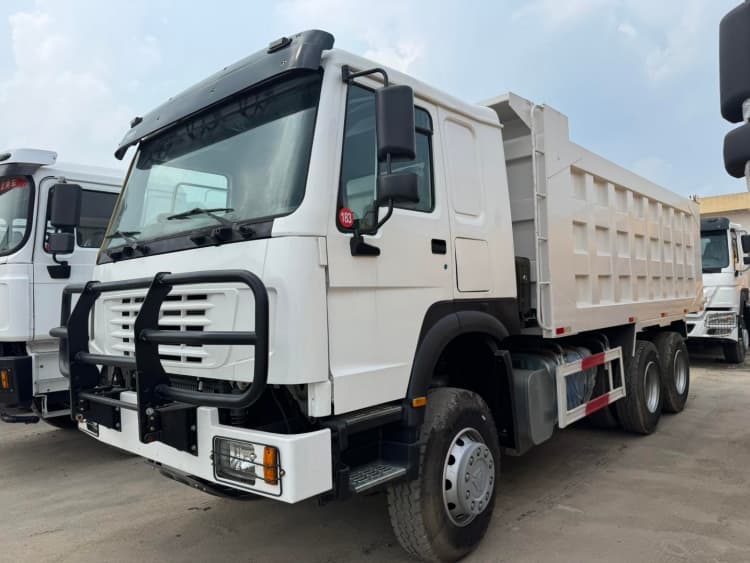
Standardized Remanufactured Technological Iteration Trends
Introduction
Early heavy truck remanufacturing largely depended on manual disassembly, subjective visual inspection and conventional machining. Quality stability was constrained by technician experience, and many hidden material fatigue defects could not be effectively identified.
Driven by Industry 4.0 hardware upgrades, sensor technology, artificial intelligence and additive repair processes, heavy‑truck standardized remanufactured is undergoing profound technological iteration. These technical advances narrow the performance gap between standardized remanufactured truck and OEM new trucks, improve production repeatability, strengthen full‑process traceability, and deliver verifiable quality evidence for cross‑border fleet procurement. This page sorts out core technical evolution directions for modern standardized remanufactured.
Advanced Non‑Destructive Testing: From Simple Inspection to Multi‑Layer Defect Identification
Traditional refurbishment relied heavily on visual observation and simple measuring tools; micro‑cracks inside frame, crankshaft and axle housing were easily missed. Modern standardized remanufactured QA systems deploy multi‑modal NDT equipment as standard production infrastructure.
- Ultrasonic testing: Detects internal subsurface cracks for frame rails, crankshafts and axle housings without destroying base material.
- Magnetic particle inspection: Identifies surface fatigue cracks on high‑stress forged components.
- Digital radiographic inspection: Checks internal welding quality of repaired frame sections.
- Automated scanning workflow: NDT results are digitally archived and bound to component serial numbers and vehicle VIN, replacing paper‑based manual records.
Advanced NDT raises the threshold for core screening: cores with non‑repairable hidden fatigue damage are eliminated before assembly, greatly lowering later‑stage in‑service failure risks.
Additive Repair & Precision Machining Technology Upgrade
In early‑stage remanufacturing, worn high‑value parts were mostly scrapped and directly replaced with new spare parts, pushing up production cost and resource waste. New additive manufacturing and surface strengthening technologies realize high‑precision dimensional restoration for qualified worn components.
- Thermal spraying and cold spray technology: Rebuild worn journal surfaces of crankshaft, camshaft and gear mating faces, restoring original design dimension and surface hardness.
- Directed energy deposition additive repair: Repair partial local damage of cast housings under controlled metallurgical conditions.
- CNC automated machining: Computer‑controlled grinding and boring, strictly following OEM tolerance thresholds, eliminating errors caused by manual operation.
- Clear application boundary: Additive repair is only applied for components whose base material remains intact; parts with material fatigue or deep cracks are still rejected.
Properly applied additive technology optimizes resource utilization while keeping standardized remanufactured output consistent with factory‑new performance specifications.
AI‑Driven Core Evaluation & Intelligent Component Grading
Core condition assessment has long been the biggest variable in remanufacturing production. Manual evaluation produces inconsistent grading outcomes for identical‑condition incoming cores. AI‑assisted systems change this situation.
- Computer‑vision defect recognition: Cameras capture surface wear, pitting and deformation of disassembled parts; AI models automatically classify defect severity.
- Machine‑learning core eligibility prediction: Combine ECU historical fault data, mileage records, working‑condition metadata and measured physical parameters to judge whether a truck is suitable for remanufacturing.
- Intelligent part‑grading algorithm: Automatically sort disassembled components into three categories: reusable after repair, repairable, and directly scrapped.
- Human‑in‑the‑loop mechanism: AI outputs reference suggestions, while professional technicians make final confirmation decisions.
Intelligent grading stabilizes product consistency across production batches and lowers dependence on senior technician experience.
Digital Twin and Full‑Vehicle Simulation Validation
Digital twin technology builds virtual mapping for each standardized remanufactured truck, covering powertrain parameters, frame structural state, braking system calibration and after‑treatment status.
- Component‑level digital twin: Simulate stress distribution of repaired frame and key assemblies under full‑load heavy‑duty working cycles.
- Pre‑simulation of assembly matching: Predict potential interference risk before physical assembly, reduce rework frequency.
- Bench‑test data mapping: Dynamometer and static‑test data feed back into digital twin model for performance comparison against OEM baseline.
- Retain twin data in traceability dossier: Fleet buyers can view simulated working‑condition performance together with physical test reports.
Digital twin cannot completely replace real‑world road testing, yet standardized remanufactured effectively optimizes test item configuration and shortens validation cycles.
Automated Bench Testing and Intelligent Full‑Vehicle Test System
In old‑style refurbishment, technicians subjectively judge engine power, shift smoothness and braking effect through hearing and simple road runs. Modern industrial standardized remanufactured adopts standardized automated bench systems.
- Powertrain dynamometer: Automatically sweep power‑torque curve, record oil‑pressure fluctuation and temperature change under variable‑load cycles.
- Pneumatic‑circuit comprehensive test bench: Quantify system air leakage value under rated working pressure.
- Automated emission‑detection equipment: Collect exhaust‑gas data of SCR‑DPF system to verify compliance with target‑market emission standards.
- Load‑simulated road‑test equipment: Part of road‑validation work can be finished on test benches, lowering reliance on outdoor test‑track conditions.
All test indicators generate timestamped digital reports linked to VIN, providing objective measurable evidence for remanufacturing certification and ESG audit.
IoT‑Enabled Full‑Process Traceability and Smart Assembly Management
Traditional remanufacturing frequently loses process records during disassembly‑reassembly workflow. IoT hardware together with manufacturing execution systems realize whole‑process data capture.
- RFID tags for key assemblies: Track each high‑value component through disassembly, cleaning, inspection, repair and reassembly stages.
- Torque‑controlled smart tightening tools: Automatically record bolt tightening torque values, preventing human error in assembly operations.
- Sensor data collection on production stations: Upload inspection and test data directly to cloud‑based asset dossier without manual transcription.
- VIN‑centred unified data platform: Fleet purchasers can retrieve inspection logs, part‑replacement lists and test records via unique vehicle identifier.
IoT‑based traceability infrastructure is the technical foundation to distinguish standardized remanufactured from informal workshop refurbishment.
Electronic and After‑Treatment Reman Technology Upgrades
New‑generation heavy trucks carry complex ECUs, multiple sensors and sophisticated exhaust after‑treatment systems. Early remanufacturing capacity mainly focused on mechanical assemblies, while modern standardized remanufactured expands into electronic domains.
- ECU read‑write, fault erasure and recalibration: Reload OEM‑standard calibration parameters instead of retaining historical fault data from used cores.
- Sensor performance calibration: Test and verify temperature, pressure and wheel‑speed sensor signal accuracy.
- SCR‑DPF regeneration and activity detection: Evaluate catalyst activity rather than only simple cleaning.
- Wiring‑harness remanufacturing standards: Insulation testing, connector renewal rules and ageing assessment specifications for full‑vehicle wiring systems.
Progress in electronic‑system remanufacturing enables older core trucks to restore modern‑vehicle‑level safety and emission‑control performance.
Existing Technical Bottlenecks and Development Limitations
- High‑equipment investment cost: Advanced NDT, additive‑repair and automated‑test benches require large‑scale capital input, creating barriers for small‑scale reman operators.
- Material‑repair technical boundary: Additive repair cannot solve deep‑level material fatigue; misapplication may bring hidden safety hazards. Strict process specification is essential.
- Lack of unified global data format: Digital‑traceability file standards differ among regions, bringing obstacles for cross‑border data exchange.
- Talent gap: Standardized remanufactured needs compound technicians familiar with mechanical repair, electronic diagnostics and digital‑system operation.
Conclusion
Technological iteration is the core driving force for heavy truck reman to evolve from experience‑dependent repair to standardized remanufactured. Advanced NDT detection, additive material restoration, AI‑assisted evaluation, automated testing and IoT traceability systems jointly narrow the performance gap between standardized remanufactured truck and new OEM trucks.
For global fleet decision‑makers, technical capability of remanufacturers, rather than superficial appearance, should become a key evaluation dimension in procurement. As related equipment costs gradually decrease and industry standards converge, these new technologies will further lift the overall quality level of the global remanufacturing industry.