
What is Remanufacturing?
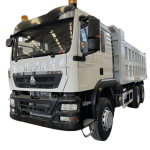
Overview
Remanufacturing is a formal industrial manufacturing process defined by strict standardized workflows, precision quality control, and full lifecycle verification. Unlike general repair, overhaul, or cosmetic refurbishment, certified remanufacturing treats old equipment cores as industrial raw materials and rebuilds them through complete disassembly, scientific screening, component regeneration, standardized reassembly, and multi-stage performance testing. The final remanufactured asset achieves stable, near-new operational performance, predictable service life, and fully traceable quality credentials.
Table of Contents
- Official Industrial Definition of Remanufacturing
- Six Core Industrial Standards of Certified Remanufacturing
- Full Lifecycle Traceability System (Core Credibility)
- Essential Differences: Remanufacturing vs Refurbishment vs Repair
- Core Value and Industrial Advantages of Remanufacturing
- Industry Misconceptions to Clarify
- Application Scenarios of Certified Reman Assets
Related Articles
- What is Remanufacturing?
- Remanufactured vs Refurbished vs Overhaul
- Common Myths of Reman Equipment
- Core Principle of Certified Remanufacturing: Restoring Like-New OEM Performance
- Why Remanufacturing Is the Future of the Heavy Equipment Industry?
- Why Certified Reman Assets Dominate Global 2–5 Year Mid-Term Projects?
- Scenario-Based Customized Reman: Outperforming Generic New Equipment in Complex Working Condition
Official Industrial Definition of Remanufacturing
Certified remanufacturing is a systematic, factory-level industrial regeneration process, defined by three core authoritative attributes:
Standardized Process-Oriented Manufacturing
- It follows fixed industrial workflows rather than empirical maintenance.
- Every step is standardized, repeatable, and compliant with unified technical specifications, eliminating random manual operation differences.
Performance Restoration to OEM-Equivalent Level
- Eligible aged core assets are fully regenerated to meet or match original factory performance standards, covering power output, structural stability, system coordination and load-bearing capacity.
Data-Verified and Auditable Quality Output
- All quality judgements rely on objective detection data, tolerance values and test results.
- Finished assets deliver verifiable reliability, instead of subjective working-condition judgement.
Six Core Industrial Standards of Certified Remanufacturing
Genuine industrial remanufacturing must comply with six non-negotiable process standards, which fundamentally distinguish certified reman from informal workshop renovation.
Full Disassembly Instead of Partial Maintenance
- All assemblies and components of the equipment are completely disassembled down to individual parts.
- No residual assembly structure is retained. Full disassembly ensures that all hidden wear, internal fatigue, aging seals, and invisible defects can be fully exposed and inspected, eliminating blind spots in traditional partial maintenance.
Industrial Cleaning and Defect Exposure
- All disassembled components undergo professional classified industrial cleaning to remove oil sludge, carbon deposits, rust layers, and surface attachments.
- Clean component surfaces provide accurate conditions for subsequent dimensional measurement and defect detection, ensuring no defect is covered by dirt or oxidation.
Precise Component Grading and Scrapping Mechanism
- All components are measured and inspected against OEM tolerance standards and classified into three grades: reusable, regenerable, and scrap.
- Any component exceeding the design fatigue limit or dimensional tolerance is strictly scrapped or professionally regenerated.
- No over-limit worn parts are reused to guarantee structural and mechanical accuracy.
NDT Structural Safety Verification
- All key load-bearing structural components and critical welds are inspected via professional Non-Destructive Testing (NDT).
- Subsurface cracks, metal fatigue, internal voids, and hidden structural risks that cannot be identified by visual inspection are fully detected and eliminated to ensure long-term operational safety under heavy-load working conditions.
Standardized Torque Reassembly and System Calibration
- Reassembly strictly follows OEM industrial assembly specifications, standard torque values, and assembly sequences.
- After mechanical assembly, the entire vehicle powertrain, hydraulic system, braking system, and electrical system are fully calibrated to eliminate performance drift and ensure overall coordination and stability.
Multi-Stage Bench and Load Testing Validation
- Finished remanufactured assets pass independent bench testing of core assemblies and full-vehicle simulated load testing.
- Power output, pressure stability, temperature control, vibration, and operational stability are verified under no-load and heavy-load conditions.
- Only assets that fully meet performance standards are allowed to leave the factory.
Full Lifecycle Traceability System (Core Credibility)
The traceability system is the core credibility foundation of certified remanufacturing, consisting of four complete closed-loop modules:
Unique Independent Asset ID
- Each remanufactured equipment is assigned a exclusive permanent ID throughout the whole rebuild cycle, serving as the unique credential to bind all process records and asset information.
Full Process Data Archiving
- Covers core intake screening, disassembly logs, industrial cleaning records, precision dimensional measurement data, NDT inspection reports, component replacement lists, assembly torque parameters and system calibration data.
Multi-Stage Test Record Retention
- All bench test data, simulated load test results, failed item correction records and final factory acceptance reports are permanently stored to prove standardized quality control.
Long-Term Auditable Query Mechanism
- Digital cloud archives plus physical document packages support long-term inquiry, third-party audit, enterprise asset valuation, ESG reporting and secondary resale verification.
Essential Differences: Remanufacturing vs Refurbishment vs Repair
Most market misunderstandings originate from confusing remanufacturing, refurbishment, and ordinary repair. The three modes have essential differences in process depth, quality logic, and final performance.
Certified Industrial Remanufacturing
- Full disassembly + component grading + NDT structural detection + standard reassembly + load testing + full traceability.
- Restores equipment to near-new factory performance with predictable service life and formal quality certification.
Equipment Refurbishment (Reconditioning)
- Focuses on surface cleaning, repainting, and replacement of obvious faulty parts.
- No full disassembly, no systematic tolerance detection, no structural fatigue screening.
- Only improves appearance and basic functions, without eliminating hidden internal risks.
Ordinary Equipment Repair
- Targeted single-point fault fixing to restore basic operability.
- No overall component inspection, no performance calibration, no standardized quality control.
- It solves current failures but cannot prevent subsequent hidden breakdowns.
Core Value and Industrial Advantages of Remanufacturing
Factory-Grade Reliability with Controllable Risks
- Through full-process inspection and defect elimination, industrial remanufacturing completely removes hidden structural and mechanical risks, solving the uncertainty of used equipment quality and ensuring long-term stable operation of fleet assets.
Significant Total Cost Optimization
- Certified remanufactured assets achieve near-new performance at far lower upfront investment than new equipment.
- With stable uptime, reduced failure rate, and predictable residual value, it effectively lowers the overall fleet TCO (Total Cost of Ownership).
Standardized and Auditable Quality System
- All quality data is digitized and archived, supporting enterprise asset management, third-party audits, project tender verification, and secondary asset valuation.
Low-Carbon Circular Economy Compliance
- Industrial remanufacturing retains qualified metal substrates, saves massive virgin raw materials, reduces industrial energy consumption and embodied carbon emissions, and provides verifiable ESG and sustainable development benefits for enterprises.
Customizable Scenario Adaptability
- Different from fixed-spec new vehicles and used equipment, reman equipment can be customized and upgraded in braking, suspension, powertrain calibration, and sealing systems according to mine, construction, highway, and remote site scenarios to match actual working conditions.
Industry Misconceptions to Clarify
Remanufacturing is not second-hand equipment
- Second-hand equipment has aging accumulation and unknown residual life.
- Remanufactured equipment undergoes full industrial regeneration and performance verification, with defined service life and standardized quality guarantee.
Remanufacturing is not simple renovation
- Surface painting and cleaning cannot eliminate internal fatigue and hidden defects.
- Real certified remanufacturing relies on data detection and component renewal rather than cosmetic improvement.
Remanufacturing is not low-cost and low-quality
- The cost advantage of certified remanufacturing comes from reusing qualified core substrates, not reducing quality standards.
- Certified reman equipment follow stricter industrial inspection standards than ordinary new vehicles’ factory exit checks.
Application Scenarios of Certified Reman Assets
Certified remanufactured assets deliver targeted value for professional fleet scenarios, covering five core industrial applications:
Mid-Term Engineering & Mining Projects
- Ideal for 2–5 year fixed-cycle projects with tight CAPEX budgets, strict schedule requirements and clear asset exit plans, balancing reliability, cost and residual value.
Long-Term Infrastructure Construction Fleets
- Suitable for long-cycle road, bridge and dam construction sites, providing stable continuous operation performance and reducing long-term fleet maintenance pressure.
Highway & Intercity Logistics Haulage
- Customizable fuel-efficient powertrain calibration adapts to long-distance flat road operation, lowering fleet fuel consumption and daily operating costs.
Remote & Off-Grid Job Sites
- Adopts mature and easy-to-maintain configurations with complete spare parts matching, minimizing downtime caused by inconvenient local maintenance conditions.
ESG-Compliant Enterprise Fleet Operation
- Provides verifiable low-carbon and circular economy benefits, supporting corporate sustainability reports, tender ESG assessment and green asset management.